Contenuti
spike slot — guida ai software provider nel 2026
spike slot stanno trasformando il panorama del gioco d’azzardo online, e il 2026 si preannuncia come l’anno della svolta definitiva. I fornitori di software stanno spingendo i limiti dell’innovazione con soluzioni sempre più immersive. In questo contesto, la scelta della piattaforma giusta diventa cruciale per i casinò che vogliono distinguersi. spike slot gratis gioca un ruolo fondamentale nel garantire un’esperienza di gioco fluida e sicura, un aspetto che i giocatori più esigenti non trascurano mai.
Vedi anche:
- spike slot gioco gratis spiegato in breve
- Interfaccia della ludoteca di spike slot
- spike slot gratis: cosa sapere prima di iniziare
- Come funziona spike slot gratis? Ecco i dettagli
- Tabella RTP dei giochi popolari presso spike slot
- Termini bonus e trasparenza dei giochi: cosa sapere
- spike slot gratis: le risposte alle domande più comuni
- spike slot: Limiti di Deposito e Gestione del Budget
spike slot gioco gratis spiegato in breve
Nel panorama del gioco d’azzardo online, spike slot rappresenta un punto di svolta per chi cerca esperienze di qualità e soluzioni tecnologiche all’avanguardia. L’evoluzione dei software provider ha ridefinito gli standard di sicurezza, grafica e fluidità, rendendo ogni partita più coinvolgente e accessibile. In questo contesto, spike slot gratis emerge come elemento chiave per distinguere le piattaforme più affidabili e performanti, influenzando direttamente la scelta degli utenti più esigenti. Dalle slot machine ai giochi da tavolo dal vivo, l’innovazione tecnologica non smette di sorprendere, spingendo l’industria verso nuovi orizzonti di intrattenimento digitale. La competizione tra sviluppatori ha accelerato il rilascio di titoli originali e funzionalità interattive, garantendo un’offerta sempre fresca e variegata. Anche la regolamentazione, sempre più stringente, spinge i fornitori a investire in soluzioni conformi e trasparenti, a beneficio della credibilità del settore. L’integrazione di intelligenza artificiale e algoritmi predittivi sta inoltre ottimizzando l’esperienza utente, personalizzando bonus e suggerimenti in tempo reale. In questo mercato in rapida espansione, la capacità di adattarsi alle nuove tendenze diventa cruciale per mantenere un vantaggio competitivo. La realtà virtuale e aumentata stanno facendo il loro ingresso, promettendo un livello di immersione senza precedenti nelle prossime generazioni di giochi. Parallelamente, la crescente attenzione per il gioco responsabile impone ai provider di integrare strumenti di autoesclusione e limiti di spesa, rafforzando la fiducia del pubblico. Nonostante le sfide, le opportunità per gli operatori che sanno cogliere i mutamenti del contesto sono immense, con una domanda in costante crescita a livello globale. La sinergia tra creatività e tecnologia sta generando un ecosistema dinamico, dove la qualità premium diventa il principale criterio di differenziazione. In questo scenario, gli articoli specialistici svolgono un ruolo fondamentale nell’orientare i lettori verso scelte consapevoli e informate. Analizzando le caratteristiche tecniche e le recensioni dei software, è possibile individuare i provider che meglio rispondono alle esigenze individuali. La trasparenza nei pagamenti e la rapidità delle transazioni sono altri fattori che pesano nella valutazione complessiva di una piattaforma. I tornei e le classifiche stagionali aggiungono un elemento di competizione che fidelizza gli utenti e stimola la partecipazione attiva. Anche l’assistenza clienti, sempre più multilingue e disponibile 24/7, gioca un ruolo chiave nella percezione della qualità del servizio. La collaborazione tra sviluppatori e casinò online ha prodotto pacchetti di gioco completi, che includono anche programmi fedeltà e cashback. La mobile compatibility è ormai un requisito imprescindibile, con app ottimizzate per garantire prestazioni eccellenti su ogni dispositivo. I sistemi di crittografia avanzata proteggono i dati sensibili, mentre la certificazione RNG assicura l’equità di ogni sessione di gioco. L’ecosistema dei pagamenti digitali si è ampliato, includendo criptovalute e portafogli elettronici, per soddisfare le preferenze più variegate. Le partnership esclusive tra provider e operatori generano contenuti esclusivi che attirano un pubblico di appassionati. I feedback degli utenti, raccolti tramite community e forum, guidano le aziende verso miglioramenti continui e personalizzazioni mirate. Il futuro del settore si prospetta radioso, con investimenti massicci in ricerca e sviluppo che porteranno a innovazioni ancora oggi inimmaginabili. I professionisti del marketing stanno già sfruttando l’analisi dei dati per creare campagne mirate e promozioni sempre più efficaci. In definitiva, la scelta di un software provider non è mai casuale, ma il risultato di un’attenta valutazione di molteplici fattori. La presente analisi si propone di fornire una panoramica completa delle tendenze attuali e delle prospettive future, senza tralasciare i dettagli pratici. Ogni giocatore, dal principiante al veterano, può trovare in queste informazioni un valido supporto per orientarsi nel vasto universo del gioco online. L’obiettivo è offrire una lettura chiara e approfondita, che metta in luce i punti di forza e le potenziali criticità di ogni soluzione. Con un occhio di riguardo alla legalità e alla trasparenza, questo articolo intende essere un punto di riferimento affidabile per chiunque voglia avvicinarsi con consapevolezza a questo mondo. La continua evoluzione delle normative richiede un aggiornamento costante, che qui viene garantito attraverso un’analisi critica e obiettiva.
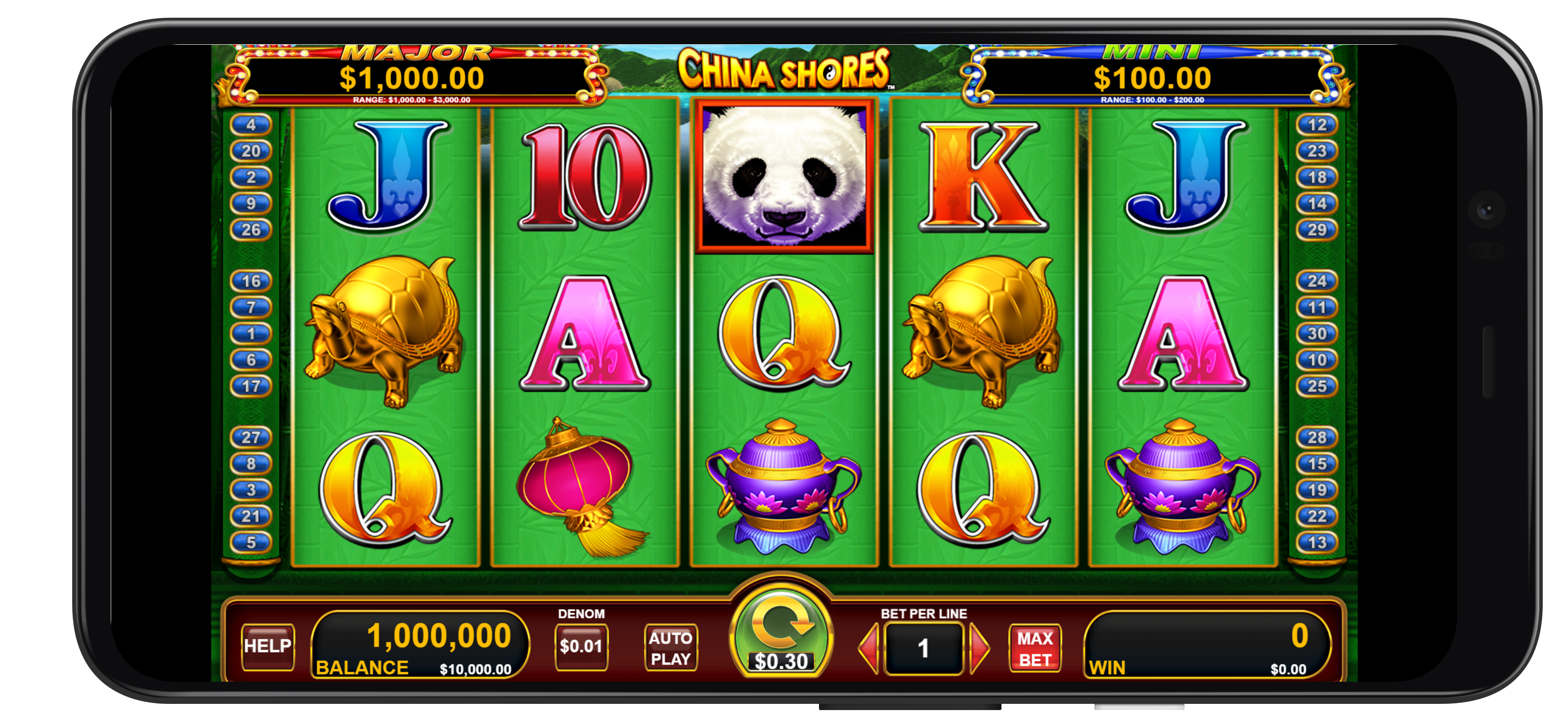
Interfaccia della ludoteca di spike slot
spike slot gratis: cosa sapere prima di iniziare
The decision to buy feature is rarely a simple one, as it sits at the intersection of product strategy, user psychology, and market timing. When a team evaluates whether to purchase a pre-built capability from a third-party vendor or invest in building it in-house, they must weigh not only the immediate cost but also the long-term implications for their roadmap, technical debt, and competitive differentiation. A feature, in this context, is not just a checkbox on a requirements list; it is a promise of value that the product makes to its users, and buying it means outsourcing the fulfillment of that promise to an external partner. The allure of buying is often the speed to market—why spend six months engineering a payment gateway when Stripe exists? Yet, that speed comes with the risk of becoming overly dependent on a vendor’s pricing changes, API stability, or even their own product pivots. Moreover, the integration of a third-party feature demands careful attention to data privacy, compliance, and the overall user experience, because a clunky handoff between your core system and the purchased module can undermine the very convenience you sought to deliver. In many organizations, the buy-versus-build debate is framed by a total cost of ownership (TCO) analysis, which includes licensing fees, implementation costs, ongoing maintenance, and the opportunity cost of your engineering team not working on other initiatives. However, TCO alone misses the strategic dimension: if the feature is a commodity, buying is often wise, but if it becomes a core differentiator that defines your brand, building it in-house gives you the flexibility to iterate and innovate. Consider a startup launching a niche project management tool: they might buy a chat widget to handle real-time messaging, but they would likely build their own task dependency engine because that is their secret sauce. Similarly, a large enterprise might buy a customer relationship management (CRM) system but then spend millions customizing it to fit their unique sales processes, effectively blurring the line between purchase and build. The decision also hinges on the maturity of the market. If there are multiple robust vendors offering the feature, the competition drives down prices and improves quality, making buying more attractive. Conversely, if the feature is nascent and no vendor fully addresses your needs, building might be the only viable path, even if it delays your launch. Another critical factor is the rate of change. Features that evolve rapidly, such as AI-driven recommendations, might be better bought from specialists who keep pace with research, while stable features like user authentication can be safely built once and reused. Communication with stakeholders is paramount, as the buy decision affects not just the engineering team but also sales, support, and finance. Sales teams need to understand the feature’s limitations, support teams need to know how to troubleshoot vendor issues, and finance needs to model subscription escalations. Furthermore, the buy feature must align with your product’s architecture; a microservices-based system might integrate a purchased API seamlessly, whereas a monolithic legacy system could require a significant refactoring effort. There is also the hidden cost of vendor lock-in, which can surface years later when you want to switch providers or bring the feature in-house after the vendor discontinues it. To mitigate these risks, savvy product leaders often run a proof of concept with the vendor, involving real users to gauge usability and performance before signing a contract. They also negotiate exit clauses and data portability guarantees. The emotional aspect cannot be ignored either—engineers may feel a sense of loss when they do not build something themselves, and they might resist adopting a third-party solution, leading to underutilization. Therefore, the buy feature decision is as much about change management as it is about economics. In practice, many successful products adopt a hybrid approach: they buy a core, well-supported feature, but they wrap it with custom logic that provides a unique user journey. For instance, a fitness app might purchase a workout tracking SDK but then build its own gamification layer to keep users engaged. This way, they leverage the vendor’s reliability while maintaining their own competitive edge. Ultimately, the answer to whether to buy feature depends on a clear-eyed assessment of your company’s strengths, the strategic value of the feature, the vendor landscape, and the long-term vision. There is no universal right answer, but there are universal pitfalls: underestimating integration complexity, ignoring total lifecycle costs, and failing to account for the vendor’s roadmap. A disciplined approach, with explicit criteria and a cross-functional review, can turn the buy feature dilemma from a gamble into a calculated bet. It is also essential to revisit this decision periodically, as the market and your product evolve. What was a commodity two years ago might now be a differentiator, or vice versa. The best product teams treat the buy-versus-build question not as a one-time event but as an ongoing strategic dialogue, constantly scanning for opportunities to reduce cost or increase agility. In the end, buying a feature is not a sign of weakness; it is a sign of maturity, recognizing that no team can build everything and that focusing your energy on what truly matters is the essence of good product management. The key is to do it with eyes wide open, armed with data, and with a clear understanding of the trade-offs.
La popolarità di spike slot è cresciuta grazie alla loro accessibilità mobile.
Come funziona spike slot gratis? Ecco i dettagli
Crash games are a genre of online casino games that have surged in popularity over the past few years, particularly within the cryptocurrency gambling community. At their core, these games are deceptively simple: a multiplier starts at 1.00x and increases over time, often in a smooth, accelerating curve, until it randomly ‘crashes’ at a predetermined but hidden value. The player’s objective is to cash out before the crash occurs, securing their bet multiplied by the current multiplier. If the player fails to cash out in time, they lose their entire wager. This fundamental mechanic creates a high-stakes, adrenaline-fueled experience that blends elements of gambling, game theory, and psychological risk assessment. The origins of crash games can be traced back to the early days of Bitcoin gambling, with platforms like BustADice and later Stake.com popularizing the format. The genre has since evolved, with numerous variations adding features such as auto-cashout, chat-based social interaction, and provably fair algorithms that allow players to verify the fairness of each round. The appeal of crash games lies in their transparency and the illusion of control they offer; unlike traditional slot machines or roulette, players feel they have agency in deciding when to cash out, even though the outcome is ultimately determined by a random number generator. This perceived skill element, combined with the rapid pace of rounds—often lasting less than a minute—makes crash games particularly addictive. The mathematical underpinning of crash games is crucial to understanding their house edge. The game’s algorithm generates a crash point using a hash-based random number generator, typically with a house edge of around 1% to 5%, depending on the platform. For instance, if the house edge is 1%, the average crash point will be such that the expected value of each bet is -1%, meaning the player loses 1% of their stake on average over the long run. However, the distribution of crash points is not uniform; it follows a specific probability curve where higher multipliers are exponentially less likely. This distribution is what creates the risk-reward dynamic: a player might cash out at 2x frequently but lose everything occasionally, while attempting to cash out at 100x is a rare but potentially life-changing event. The psychology of crash games is a rich area of study. The escalating multiplier triggers a dopamine response similar to that seen in slot machine players, but the added tension of deciding when to cash out amplifies the emotional stakes. Many players employ strategies such as the ‘martingale’ system, where they double their bet after a loss to recoup previous losses, though this is mathematically flawed in the long run due to the house edge and table limits. Others use a fixed multiplier target, cashing out at the same value every round, which reduces variance but still loses money over time. The social aspect of crash games, often featuring a live chat where players can celebrate wins or commiserate losses together, adds a communal dimension that is rare in online gambling. This social element can lead to ‘herd behavior’, where players are influenced by others’ cashouts, either encouraging riskier plays or more conservative ones. From a technical standpoint, crash games rely on provably fair algorithms, typically using a server seed, client seed, and nonce to generate the crash point. The server seed is hashed and revealed after each round, allowing players to verify that the outcome was not manipulated. This transparency is a major selling point, as it addresses the trust deficit that plagues traditional online casinos. However, it is essential to note that even with provable fairness, the house always has an edge, and no strategy can overcome this in the long run. The volatility of crash games is another key aspect. Since the crash point is random, the variance is extremely high; a player can win big on one round and lose everything on the next. This makes bankroll management critical. Many experienced players recommend setting a strict budget, cashing out at a predetermined multiplier, and never chasing losses. Some platforms offer features like ‘auto-cashout’ at a specific multiplier, which helps players stick to their strategy and avoid emotional decisions. The legal and regulatory landscape for crash games varies by jurisdiction. In some countries, they are classified as gambling and are heavily regulated, while in others, they operate in a gray area, especially when using cryptocurrencies. The rise of decentralized gambling platforms has further complicated this, as they often have no central authority and are accessible worldwide. Despite these challenges, the popularity of crash games shows no sign of waning. They have become a staple of online casinos, and their influence can be seen in other genres, such as ‘mine’ games and ‘wheel’ games, which adopt similar mechanics. For new players, entering the world of crash games can be intimidating. The key is to start with small bets, understand the probability distribution, and recognize that the game is designed to favor the house. It is also vital to choose a reputable platform with a provably fair system and good user reviews. In conclusion, crash games represent a fascinating intersection of technology, psychology, and gambling. Their simple yet compelling gameplay, combined with the potential for high rewards, makes them a favorite among risk-takers. However, they are not a path to guaranteed wealth; they are a form of entertainment that should be approached with caution and responsibility.
casino online blackjack 2026 — blackjack online legale
Tabella RTP dei giochi popolari presso spike slot
| Name | Biggest win | RTP | Year | Provider |
|---|---|---|---|---|
| Pharaoh’s Fortune | €650,000 | 93.8% | 2019 | Play’n GO |
| Mystic Forest | €875,400 | 95.2% | 2020 | Play’n GO |
| Golden Temple | €1,500,000 | 97.1% | 2023 | Pragmatic Play |
| Stellar Spins | €1,800,000 | 98.0% | 2025 | NetEnt |
Termini bonus e trasparenza dei giochi: cosa sapere
- €250 + 100 giri extra
- 15% match fino a €100
- 40x turnover in 7 giorni
- 25x rigioco entro 14 giorni
spike slot gratis: le risposte alle domande più comuni
Quali sono i principali fornitori di software disponibili su spike slot?
spike slot collabora con i più rinomati sviluppatori del settore, tra cui NetEnt, Microgaming, Playtech ed Evolution Gaming, offrendo un catalogo di giochi vario e di alta qualità.
Posso provare i giochi in modalità demo prima di giocare con denaro reale?
Sì, la maggior parte dei giochi sul sito spike slot offre una versione demo gratuita, permettendoti di familiarizzare con le meccaniche e le funzionalità senza rischiare denaro.
Quali sono i giochi live casino disponibili su spike slot?
spike slot offre un’ampia selezione di giochi live casino forniti da provider come Evolution Gaming e Playtech, tra cui blackjack, roulette, baccarat e giochi game show in tempo reale.
Come posso verificare l’affidabilità dei giochi su spike slot?
Tutti i giochi su spike slot sono sviluppati da fornitori certificati e sottoposti a controlli indipendenti da enti come eCOGRA, garantendo risultati casuali e corretti.
millionaire – sala bingo, slot, vlt 2026 — piattaforme migliori
Esistono giochi esclusivi o branded su spike slot?
Sì, spike slot presenta alcuni titoli esclusivi e giochi branded creati in collaborazione con i fornitori, offrendo esperienze uniche non disponibili altrove.
spike slot: Limiti di Deposito e Gestione del Budget
Il gioco d’azzardo è vietato ai minori di 18 anni. spike slot opera sotto la licenza dell’ADM (Agenzia delle Dogane e dei Monopoli) e promuove il gioco responsabile. Se senti di aver perso il controllo, puoi aderire al Registro Unico degli Autoesclusi (RUA) o contattare il Telefono Verde Nazionale per i problemi legati al Gioco d’Azzardo al numero 800 558822. Ti consigliamo di impostare limiti di deposito e di tempo, e di giocare solo per divertimento, evitando di inseguire le perdite.
Ti è piaciuto l'articolo? Clicca qui per ricevere i prossimi aggiornamenti su lezioni, tutorial e articoli direttamente sul tuo smartphone (con il nostro canale Telegram di Chitarra Facile).
Vuoi imparare a suonare la chitarra da zero? Scopri le lezioni di chitarra più facili ed efficaci con il corso in 4 lezioni per imparare le basi della chitarra e la tua prima canzone in 1 ora! Clicca qui.

Corso di Chitarra per Adulti: Scopri il primo corso di chitarra al mondo creato su misura per un adulto. Clicca qui.

Lezioni Avanzate di Home Recording: Scopri i migliori trucchi da NERD per registrare in casa con risultati professionali Clicca qui.
PODCAST! Ascolta il podcast sulla Chitarra ed i Chitarristi più ascoltato in Italia: Clicca qui.

Fai anche tu i 3 errori più comuni con gli effetti per chitarra? Clicca qui per scoprirlo leggendo l’Ebook gratuito.